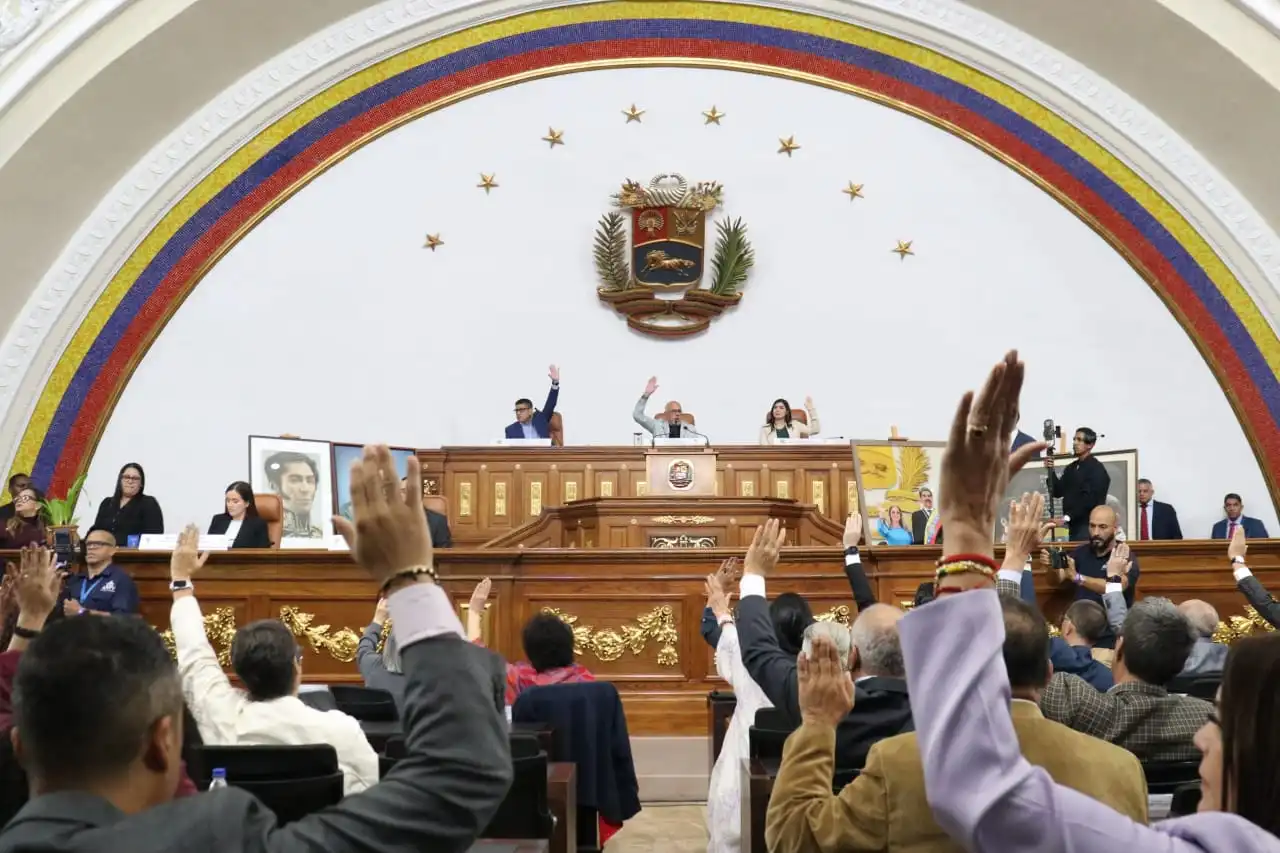
The Daily Journal.- Venezuela’s National Assembly approved a partial reform of the Organic Law on Electricity Service and the Electric Power System in its second reading on Tuesday. The legislation establishes that electricity rates will follow the country’s highest-value currency amid persistent power outages and voltage fluctuations affecting consumers.
The legislation, which contains 119 articles, establishes a subsidized rate structure for households that cannot afford the full cost of electricity. It also creates a regulatory agency to oversee electricity services, set rate conditions, and monitor contract compliance.
National Assembly President Jorge Rodríguez explained that the law’s implementing regulations will establish the mechanisms for applying subsidies and clarified that the indexation will follow the highest-value currency.
“The law establishes the existence of a subsidized rate, but the regulations, through the regulatory agency, will determine how that rate works. Rates will follow the highest-value currency, but there will also be a subsidy system, particularly for people whose income levels prevent them from paying the full rate,” he said.
The reform also opens opportunities for private companies to participate in electricity generation and self-generation for commercial purposes. Operators will be able to install power plants, generate electricity for their own consumption, or sell it under the conditions established by regulations. The legislation also allows importing electricity from neighboring countries to supply consumers in Venezuela.
Rodríguez insisted that these mechanisms do not amount to privatizing the national electricity system.
“The law does not promote, in any way, the privatization of the national electricity system. Rather, it opens the door for private sectors to participate in electricity generation and self-generation and, in that sense, engage in commercial transactions involving that electricity,” he stated.
The lawmaker maintained that the state will retain responsibility for guaranteeing electricity service, although it may share generation activities with private operators. The new regulatory agency will also have the authority to impose penalties when public or private operators violate contracts or disrupt electricity distribution.
Reform amid persistent electricity failures
The reform’s approval coincided with renewed power fluctuations in Caracas. During the parliamentary session, the capital experienced at least three voltage drops that disrupted the water supply, prompting the water utility to announce a temporary suspension of service.
Power interruptions remain a persistent problem for Venezuelan households and economic activities. According to data from the National Survey of Living Conditions (Encovi), only 10% of households report never experiencing electricity outages, a proportion unchanged since 2019.
The rest of the population faces power outages lasting several hours and voltage fluctuations that disrupt daily life, damage household appliances, and affect productive activities.
The reform introduces changes to electricity rates and the conditions governing private-sector participation. However, its implementation will depend on developing regulations, operating the new regulatory agency, and establishing mechanisms to guarantee subsidies and oversee operators.