By Neirlay Andrade
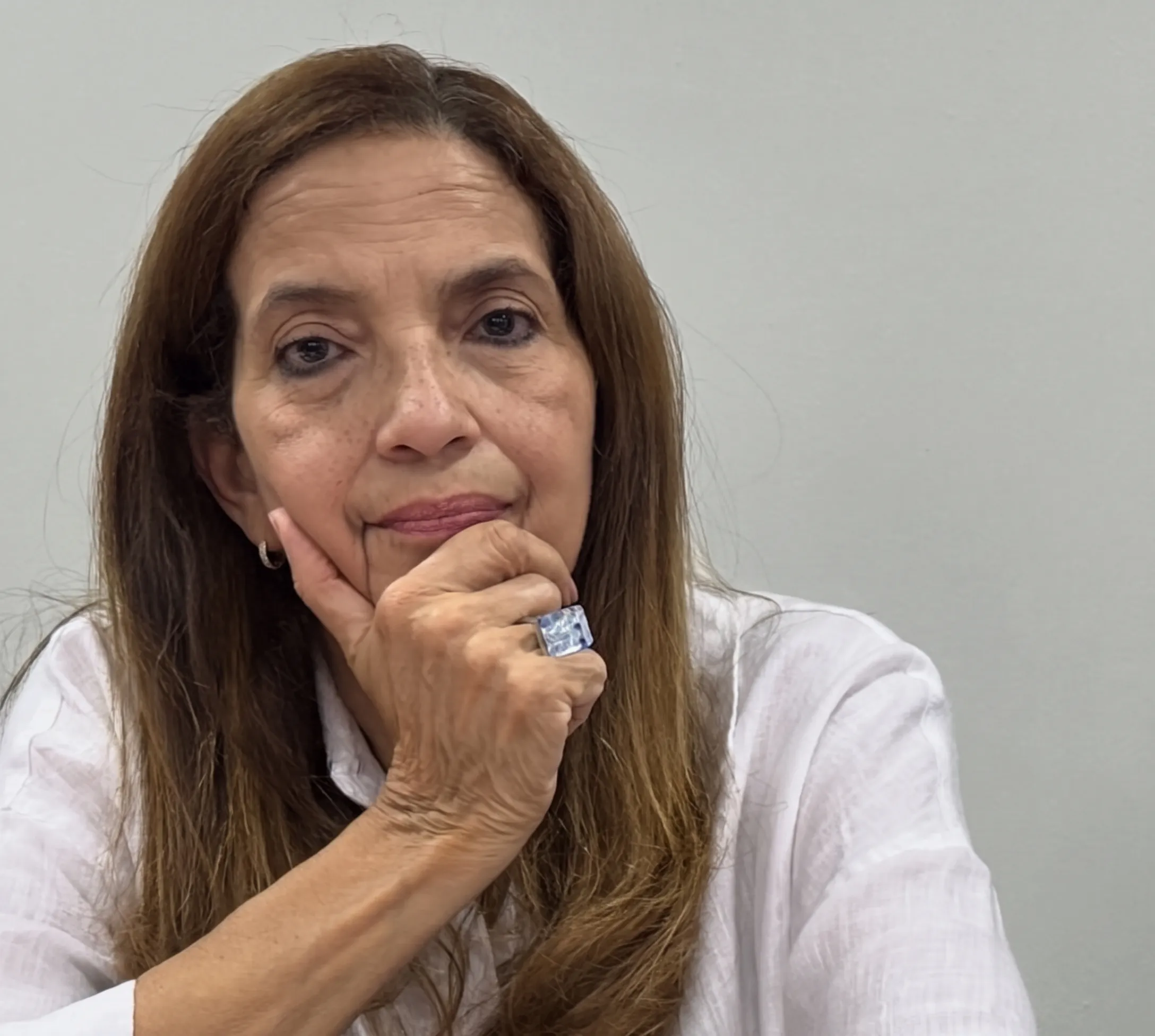
The Daily Journal. — Analyzing the political transition in Venezuela under foreign tutelage has become one of the most frequent subjects of discussion in recent months. For Deborah Van Beker, co-director of Ideas por la Democracia, one actor remains essential: the citizenry. In her view, any process of political change in Venezuela must guarantee the active participation of civil society and social movements rather than limit decision-making to political actors at the negotiating table.
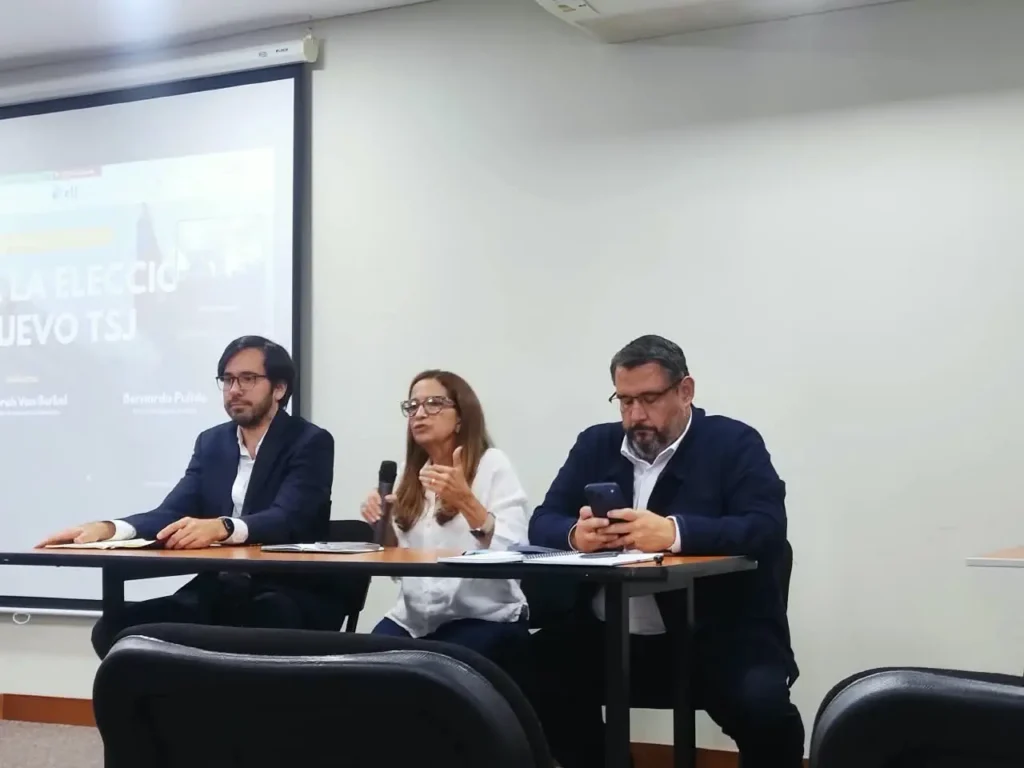
Recently, at a forum organized by the Center for Political and Government Studies at Andrés Bello Catholic University (UCAB), the activist argued that civil society must be recognized as an actor capable of influencing the country’s institutional, political, and social transformations.
“This process of change that Venezuela is undergoing will not be possible unless citizens, civil society organizations, and social movements become protagonists, participants in the process, and political agents of change,” Van Beker stated. She insisted that these sectors cannot remain “spectators to decisions beyond their sphere of influence, beyond their ability to access information, acquire knowledge, engage in debate, and participate in these processes.”
The representative noted that citizen participation continues to suffer the consequences of years of shrinking civic space, persecution, and the criminalization of organizations. “Restricting the very possibility of organizations’ existence has been a state policy, a policy pursued by the state against citizens and against organizations,” she argued.
In her view, restoring these spaces will not happen automatically with political change. “Citizens have discovered that unless they become active and continue demanding their rights, no one will simply hand them a place in this dynamic of change,” she said.
Van Beker also questioned the legitimacy of the authorities and argued that initiating a transition process alone cannot resolve the institutional crisis. She recalled that Venezuela already faced a legitimacy crisis before January 3 because of the refusal to recognize the election results. She further maintained that the authorities who subsequently assumed power lack both legitimacy of origin and legitimacy in their exercise of power.
“Elections are a key element in restoring legitimacy, but at the same time, [there must be] a demand for the full enforcement of all civil and political rights that have been violated in this country,” she stated.
In this regard, she warned that compliance with the Constitution cannot become a matter of daily negotiation among political actors. “As a nation, we are operating outside the Constitution,” she said, questioning why matters such as judicial appointments are discussed without following the criteria established in the constitutional text.
She argued that if citizens and political actors normalize and accept this dynamic, advancing toward democratic transformation will become increasingly difficult. Although she acknowledged the need for dialogue, negotiation, and political agreements during a transition, she warned that such arrangements could ultimately reproduce antidemocratic practices.
“That does not mean creating a dynamic that, in one way or another, opens the door to reestablishing antidemocratic practices under a new guise, while giving the impression that progress is taking place when, in reality, it is not,” she warned.
Negotiations cannot be the only forum for decision-making
Van Beker acknowledged that the negotiating table must have the opportunity to pursue its agenda, but insisted that it cannot become the sole mechanism for determining the country’s future. She noted that other negotiating forums exist, particularly on economic matters, where the public remains unaware of the discussions and decisions.
“There are spaces where Venezuela’s economic future is being determined, yet we Venezuelans have no opportunity to participate in those discussions,” she stated.
She added that violations of economic, social, cultural, and environmental rights persist, while authorities have failed to address these issues through public discussions involving all sectors of society.
Against this backdrop, she explained that a group of civil society organizations has begun developing an agenda to monitor institutional changes, with particular attention to the justice system. She clarified that their role is not to occupy a seat at the negotiating table, but to exercise citizen oversight and accountability.
“Our role is not to become members of the negotiating table, but we can act as watchdogs. We can exercise our right to information, our right to transparency, our right to consultation, and our right to contribute to these processes,” she explained.
As part of this effort, the organizations developed a set of indicators, known as the “thermometer,” to assess progress in the transition process. Their criteria include ending repression, ensuring accountability, implementing institutional reforms, protecting civic space, and repealing restrictive laws.
Van Beker explained that during a hearing before the Inter-American Commission on Human Rights in August, the organizations presented the findings of their monitoring efforts and reported that none of the indicators showed progress.
“For us, the institutionalization process was taking shape in ways that failed to address these fundamental indicators identified by civil society,” she stated.
Consequently, she emphasized that the organizations will continue monitoring developments and publicly demanding that these issues become part of the transformation agenda.
Institutional reforms and elections in 2027
Among the proposals promoted by civil society organizations, Van Beker highlighted reopening civic space, transforming the justice system, and establishing transparent criteria for selecting Supreme Court justices and electoral authorities.
She explained that the organizations developed an evaluation matrix to assess the qualifications that members of the selection committees for the Supreme Court of Justice and the National Electoral Council should meet. She also mentioned creating scoring criteria to guide the appointment of judges and electoral authorities.
Van Beker warned that judicial reform must neither restrict nor delay changes to the electoral system, since the electoral authority must guarantee the conditions necessary to hold free, transparent, and fair elections.
In this context, she argued that citizens are demanding presidential and parliamentary elections in 2027. She rejected prioritizing regional and municipal elections if doing so would postpone the renewal of national authorities.
“Citizens are demanding elections in 2027,” she stated. She added that “the process of electing the President of the Republic through popular vote cannot be delayed, nor, of course, can the election of the National Assembly, which comes second in order of importance.”
For Van Beker, effective governance requires political and social transformation that includes the population and acknowledges its demands.
“We are not members of the negotiating table, but we believe we are that invisible fourth leg that gives the table stability and completes its agenda,” she said.
Changes must be felt in everyday life
The representative insisted that the transformation process cannot focus exclusively on institutional reforms or political agreements. She noted that workers and social movements are also taking to the streets to demand improvements in wages, healthcare, education, and living conditions.
“A large part of the transformation this country wants” is emerging from the demands of these sectors, she explained.
She warned that as long as people do not experience tangible improvements in their daily lives, they are unlikely to trust announcements of institutional change.
“As long as people do not see changes in those areas, they will not believe in institutional changes or in proposals that are too far removed from their ability to understand how those changes translate into a genuinely better quality of life,” she argued.
Van Beker reiterated that civil society must have the necessary conditions to participate, access information, and submit proposals concerning the country’s future.
“We demand participation, we demand transparency, we demand access to public information,” she declared.
She also called for meaningful opportunities to strengthen the capacities of civil society organizations and enable citizens to play an active role in the transition process.
“If civic space does not open up, how can citizens participate and become part of institutional change?” she asked.