Thirty-six military detainees are demanding their release, an end to judicial delays, and a review of their cases as human rights organizations warn of deteriorating health conditions.
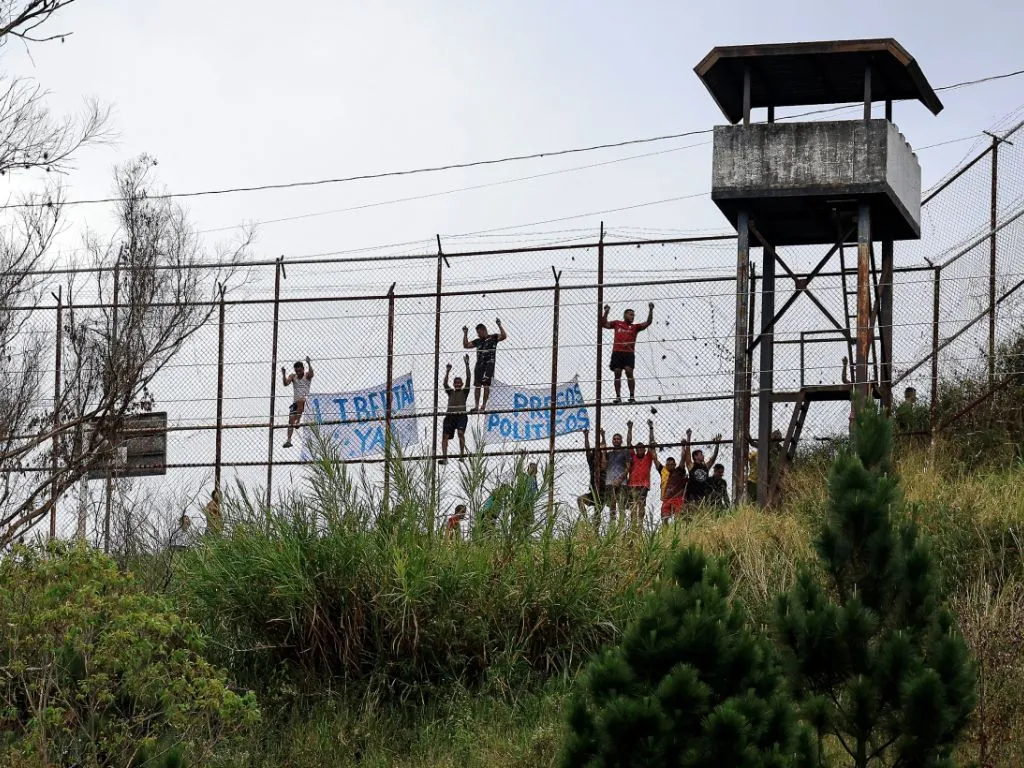
The Daily Journal – A group of 36 military personnel detained for political reasons at the National Military Detainee Processing Center (Cenapromil) in Ramo Verde, Los Teques, Miranda state, entered the ninth day of an indefinite hunger strike on Tuesday, November 17. They are demanding their release, an end to judicial delays, and a review of their case files.
According to a report from the NGO Justicia, Encuentro y Perdón (JEP), after more than 160 hours without food, the hunger strikers are experiencing physical deterioration, stomach pain, dizziness, nausea, weakness, and disorientation. At least 18 face complications from preexisting medical conditions, including hypertension, diabetes, and cardiac arrhythmias.
Sergeant Luis Alfredo Lobo Medina faces the most serious medical situation. Authorities transferred him to the Military Hospital for emergency treatment on November 14 before returning him to the prison. A day earlier, the Venezuelan Prison Observatory (OVP) reported that eight hunger strikers had suffered medical complications and required medical hydration.
The two women participating in the protest urgently requested drinking water, rehydration solutions, gastric protectants, and an in-person medical evaluation. They are First Lieutenant Carla Antón and Second Sergeant Yusimar Montilla, both linked to the Monagas Governorship case, which involves an alleged plot against the state’s then-governor, Yelitze Santaella.
No water, no toilets, no visits
Relatives and NGOs reported that prison authorities closed access between the prison tower and courtyard after the hunger strike began, leaving the protesters without drinking water or access to toilets.
Sandra Hernández, wife of Sergeant Luis Bandres, said the detainees have resorted to drinking water that prison staff uses to water plants.
According to JEP, authorities also suspended visits for all 235 detainees at Ramo Verde and deployed riot police following a pot-banging protest inside the facility.
A completed sentence and an annulled trial
The protest began on Monday, November 9, with 21 National Guard sergeants involved in the Cotiza case. Other officers and the two female military personnel subsequently joined the hunger strike.
Authorities detained the sergeants following the January 21, 2019, uprising at a Bolivarian National Guard (GNB) command post in Cotiza, Caracas. According to the OVP, the officers stole military-grade weapons and took four other security personnel hostage during the incident.
Their relatives maintain that the sergeants completed their seven-year-and-nine-month sentences on October 24, but the courts have yet to issue their release orders.
The Supreme Tribunal of Justice (TSJ) had annulled the trial and ordered a new proceeding from the beginning. Defense attorneys formally notified the Third Trial Court with jurisdiction over terrorism cases about the hunger strike and requested the detainees’ release under the Amnesty Law. The court has 15 business days to respond.
The demands extend throughout the prison. On Saturday, November 14, opposition leader María Corina Machado shared a letter from more than 150 military prisoners at Ramo Verde denouncing judicial irregularities.
Among their demands, the prisoners called for the release of those who have already completed their sentences.
According to Foro Penal, the hunger strikers are among the 322 people detained for political reasons in Venezuela.
Official silence
JEP, the Venezuelan Prison Observatory (OVP), and the Committee for the Freedom of Political Prisoners (Clippve) have demanded immediate and independent medical attention, basic conditions for survival, and the inclusion of the military detainees in future prisoner releases.
As of November 17, authorities have issued no official statement or updated medical report.
There are also no reports of visits to the prison by representatives of the Ombudsman’s Office, the Public Prosecutor’s Office, or members of the National Assembly to hear the detainees’ demands.