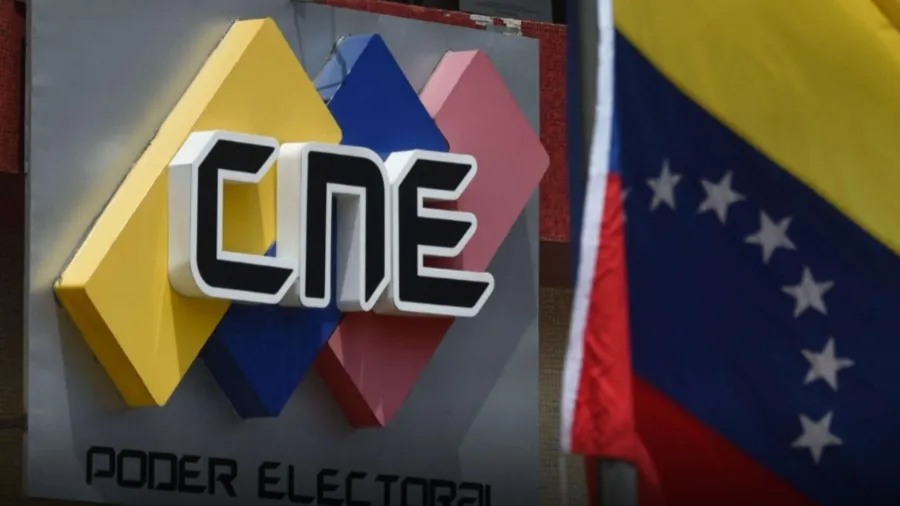
The Daily Journal.- The United States has proposed reforming Venezuela’s National Electoral Council (CNE) to turn it into a technical body without the authority to determine which candidates can participate in elections, as part of negotiations toward a political transition in the country, a senior State Department official reported.
The proposal calls for changing the electoral body’s powers and appointing new board members through a committee of experts. The selection process would resemble the mechanism both sides agreed upon for renewing the Supreme Court of Justice (TSJ), although it would not require ratification by the National Assembly.
“The CNE will essentially become a technical platform. We will strip it of all its political functions,” the official said during a background conference call with reporters.
According to the official, the reform aims to eliminate the electoral body’s authority to bar candidates or determine who may run for office, allowing it to focus exclusively on organizing and administering elections.
“Its sole responsibility will resemble that of our election departments in the United States, across their respective counties in the 50 states and territories: setting up voting machines, opening polling stations, counting votes, and publishing results,” the official explained.
The official said the CNE’s transformation would result from an agreement between Delcy Rodríguez’s interim government and the opposition faction led by Dinorah Figuera, as part of broader institutional reforms aimed at establishing conditions for presidential elections that rival political factions would accept.
Appointment of new board members and reform of electoral powers
The U.S. representative noted that discussions on reforming the CNE are progressing alongside negotiations concerning the TSJ and that both sides will address the issue during the next round of talks.
“We will establish a similar committee of experts to nominate candidates for positions on the CNE, so that we have new members on the council. But we will also fundamentally transform the very nature of the CNE through mutual agreement between both parties,” the official stated.
The proposal therefore includes two changes: appointing new electoral board members and modifying the institution’s powers to restrict its activities to technical and administrative functions.
The senior official provided no details about the committee’s composition, the criteria for selecting its members, or a specific timetable for completing the electoral reform.
Washington considers changes to the CNE essential for holding credible presidential elections. “Without a new TSJ and a new CNE, we cannot have a credible election,” the official argued.
In the official’s view, maintaining the current institutional structure could lead the losing side to challenge election results or allow institutions to obstruct a process that guarantees fair conditions for all contenders.
“We must build the framework for a credible election before we can call or hold one,” the official insisted.
Electoral reform would precede a new presidential election
The official placed the CNE reform within a broader roadmap that also calls for establishing a new TSJ before the end of 2026. Once both stages are complete, the official said Delcy Rodríguez would have to declare an absolute vacancy in the presidency, triggering six months to hold new elections under Washington’s interpretation of the Venezuelan Constitution.
“A new TSJ by the end of this year, a new CNE shortly afterward, and a declaration of an absolute presidential vacancy that would trigger the six-month cycle for presidential elections,” the official summarized while outlining the process’s objectives.
The U.S. representative said the new CNE would decide when to call and hold the vote. However, the official announced no specific election date and clarified that Rodríguez had not yet declared an absolute presidential vacancy.
The official defended the need to reform institutions before calling elections and questioned whether the country could hold legitimate elections under its current institutional structure.
“They have voting machines, they can set up polling stations and call elections next month, but that would not constitute a fair or free election,” the official said.
Washington maintains that electoral reform must allow the CNE to administer elections without interfering in political competition while preventing a Supreme Court beholden to partisan interests from overturning the results.
The official stated that the ultimate goal is to ensure that all contenders accept election results, even in defeat, and retain the opportunity to compete in future elections.
“Our goal is to achieve an election in which, once it takes place, the losing side acknowledges that the process was clean, accepts defeat, moves into opposition, and, if those in power make mistakes, runs again in four years to regain power,” the official concluded.