By Héctor Sánchez
The Daily Journal. — Whose idea was it to christen the fund into which the United States government deposits Venezuela’s financial resources, administering them without any legal or legitimate authority whatsoever, “Sovereign Transparency”?
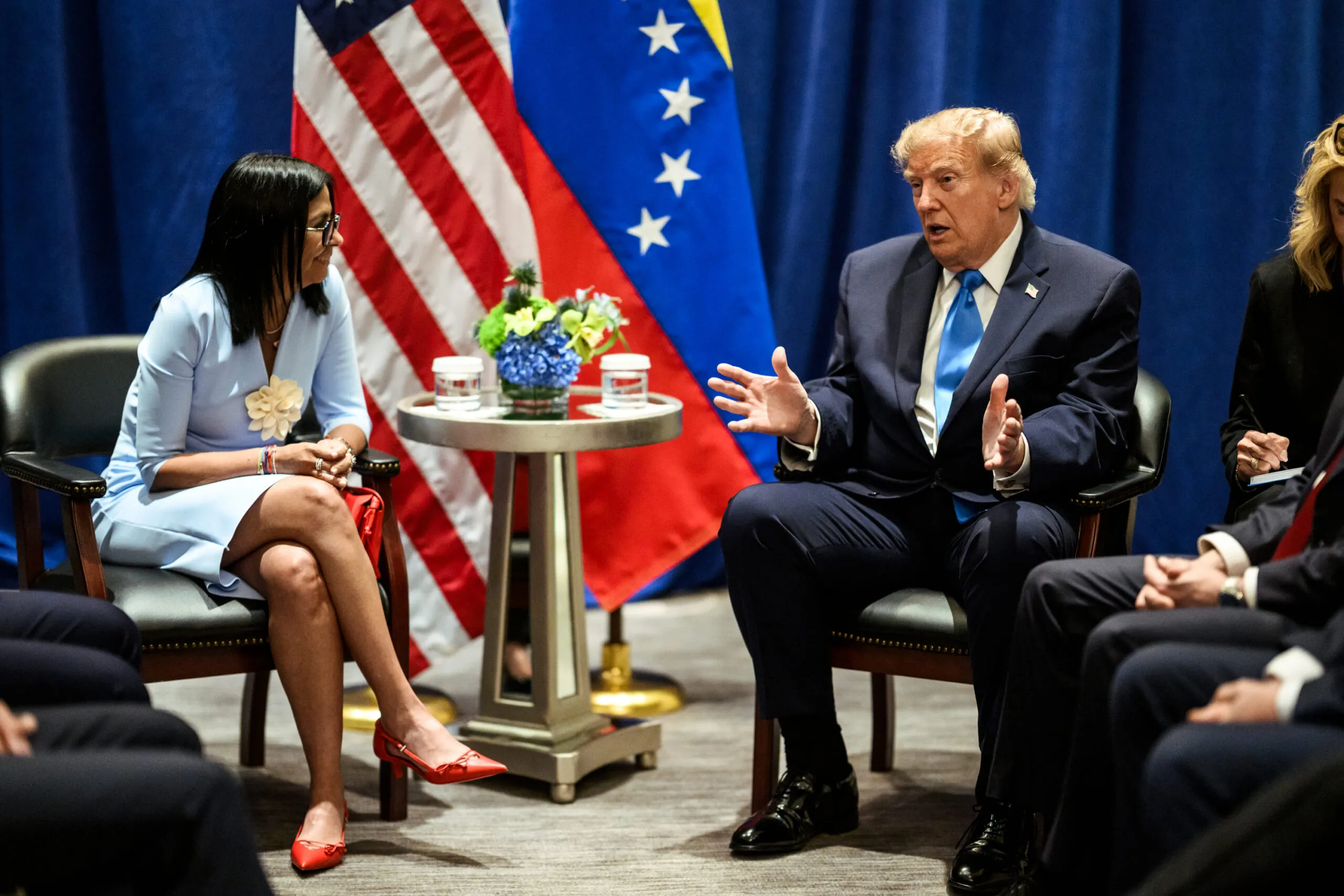
Certainly, this brainwave reveals an extraordinary degree of cynicism, dark humor, or detachment from reality. The U.S. government’s recent publication of its first audit report on the management of revenues from the sale of oil and other minerals offers the clearest demonstration of this distortion. The arrangement is as absurd as it is paradoxical: the Venezuelan government calls a portal “Sovereign Transparency” when all it does is reproduce the figures dictated by the Trump administration.
Under this astonishing arrangement, “sovereignty” amounts to passively accepting Washington’s control over the nation’s wealth, while “transparency” consists of repeating those financial statements as though they were its own.
It is the grotesque spectacle of a ward celebrating the “sovereign management” of his estate by the guardian who has stripped him of the freedom to manage it, under the pretext of his own incompetence. Yet this is no tale of an irresponsible heir. What hangs in the balance is the fate of an entire nation.
Beyond the structural opacity, the complete absence of supporting documentation, and the mathematical inconsistencies between financial statements that various analysts have begun to challenge—rightly so, though within a limited scope—lies a far more serious reality. We must repeatedly denounce that the foreign administration of the resources of the nation with the world’s largest oil reserves is not merely a technical irregularity, but a political and legal aberration. It amounts to the hijacking of our resources in collusion with domestic actors from both the government and the opposition.
Venezuela has a Central Bank, a Ministry of Economy, and state-owned enterprises. On paper, it possesses the entire institutional architecture of a state that once prided itself on being “independent.” Nevertheless, energy revenues do not flow into the national treasury. Instead, they enter a Custodial Account at the U.S. Treasury, which arbitrarily determines how much money to disburse, how to disburse it, and under what conditions.
The real scandal lies in the national political establishment’s normalization of this subordination. Those in the highest government positions have accepted this guardianship as a mechanism of biopolitical survival, designed to preserve their shares of power and privilege. Their strategic priority is not the nation, but remaining in power. And if prolonging their grip on authority requires surrendering control of national resources to a foreign power, they do so without restraint, without memory, without decency, and without the slightest trace of shame.
For their part, the political opposition factions cannot escape their share of responsibility. Quite the contrary: various opposition sectors opened Pandora’s box by promoting sanctions, applauding the financial blockade, calling for international interventions, and celebrating the military and political operations of January 3 alongside internal factions that betrayed the Executive.
The opposition cultivated the narrative that the solution to Venezuela’s conflict would come from external actors. Yet once the intervention took place and the evils of foreign guardianship were unleashed, the opposition leadership found no place at the table where the spoils were divided. Relegated to a secondary role, it watched as the international guardian preferred to deal directly with those in power. Amid this retreat and the calculations of political elites, ordinary citizens have become helpless spectators in a country treated as the spoils of war.
This theatrical production, in which the surrender of national wealth acquires the new name of “sovereignty,” finds a striking parallel in literature, particularly in Jorge Luis Borges’s short story “The Theme of the Traitor and the Hero.”
In that memorable tale, set in Ireland in 1824, the historian Ryan investigates the death of his great-grandfather, Fergus Kilpatrick, a charismatic independence leader mysteriously murdered in a theater on the eve of a victorious revolution. As Ryan delves deeper into the archives, he uncovers a disturbing truth: Kilpatrick was not a victim of the English enemy, but the traitor who had been revealing the movement’s plans. Once his own comrades discovered his betrayal, they agreed to execute him. But to avoid shattering the memory and faith of the people who adored him, the playwright James Alexander Nolan devised an elaborate theatrical production throughout the city, staging the traitor’s execution in public as the heroic martyrdom of a patriot.
In politics, just as in Borges’s fiction, the concepts of hero and traitor cease to function as absolute moral categories and become theatrical props in the service of power. The proclaimed “Sovereign Transparency” operates exactly like Nolan’s dramaturgy: a rhetorical stage set designed to transform capitulation and the loss of territorial control into a supposed institutional victory.
Those who sign away control of the nation’s energy resources to foreign American guardians behave like Kilpatrick in Borges’s story, delivering grandiose, pathetic speeches dictated by someone else’s script so the crowd will swallow the illusion of sovereignty already sacrificed behind the scenes.
Likewise, the conduct of Venezuela’s ruling elites evokes the conclusion of Borges’s narrative. When the historian Ryan discovers that the national epic was, in reality, an elaborate deception meant to conceal an act of betrayal, he also realizes he himself is part of Nolan’s carefully constructed plot. He chooses to suppress his discovery, publishing a book that celebrates the hero’s immortal glory. In much the same way, both the Venezuelan government and the opposition have chosen to conceal the collapse of genuine sovereignty to preserve the symbolic order and the advantages of the charade.
They would rather perpetuate the myth of “transparency” than reveal to the public that decisions about the country’s finances take place in American government offices. It is an open secret that, like the emperor’s nakedness, remains visible to everyone despite the elaborate masquerade of propaganda.
The lesson emerging from this intersection of political reality and literary fiction is urgent: a country cannot rebuild its destiny upon a false collective memory or the theatrical staging of foreign guardianship. As long as citizens remain trapped as a captive audience in this performance, where traitors disguise themselves as heroes and dependency masquerades as sovereignty, the nation’s wealth will remain vulnerable to plunder, and its future will continue to follow scripts written beyond its borders.
Thanks to the same old traitors.