By José Leonardo Salazar
The Daily Journal. — The xerophytic ecosystem of Lara state has lost nearly 500,000 hectares over recent decades due to indiscriminate logging. As communities denounce advancing desertification and the lack of official responses, environmentalists demand urgent measures to halt an ecological and social crisis.
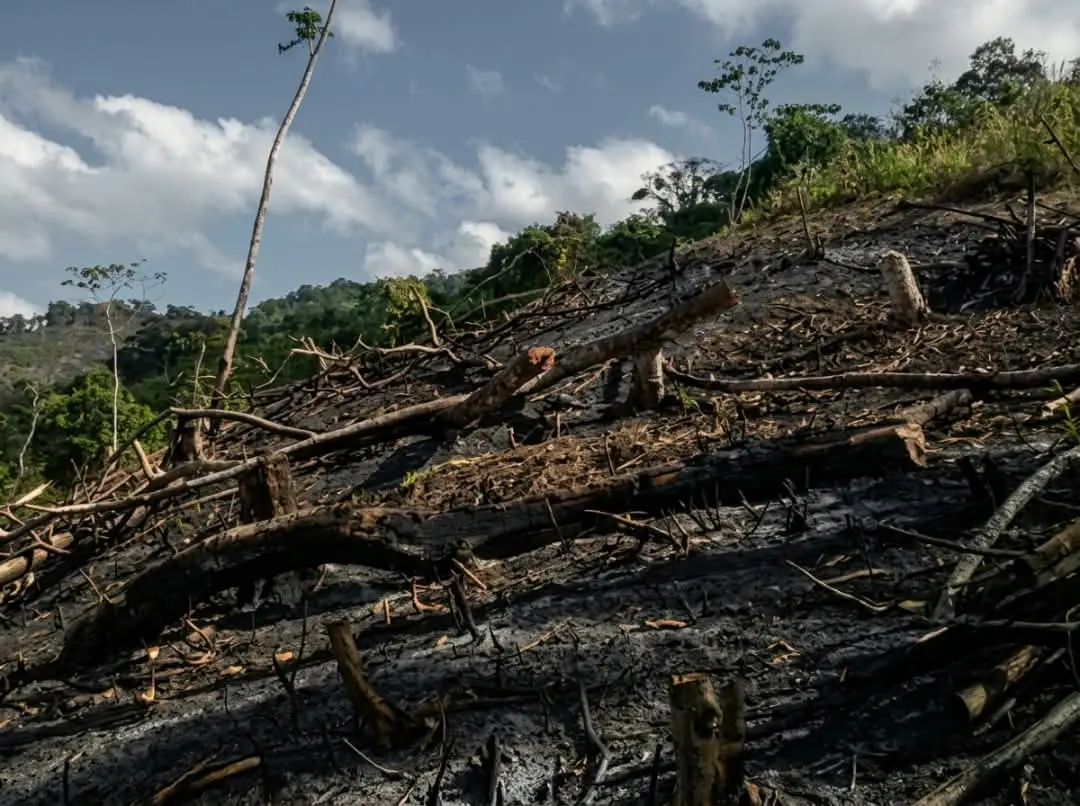
One of Venezuela’s most distinctive ecosystems faces a silent yet devastating threat. The semiarid region of Lara state, a xerophytic forest covering more than 40% of the state’s territory, has lost up to 50% of its vegetation cover, shrinking from one million hectares recorded in 1989 to barely 500,000 today.
Behind this massive loss lies a booming business: the production and export of charcoal. Producing a single ton of charcoal requires sacrificing up to five tons of slow-growing native wood species, including cují, vera, curarí, semeruco, and tamarind. Producers burn these trees in traditional kilns to turn the wood into charcoal.
According to complaints filed by regional environmental movements, approximately 24 charcoal companies operate in the area, but only six hold formal forest exploitation permits. The remaining companies operate through an informal network in which intermediaries provide chainsaws to economically vulnerable residents, establishing a system of social and environmental exploitation that contradicts the ecosocialist model. The illegally harvested wood then enters a packaging and export chain that supplies international markets, including the United States, Turkey, Lebanon, and Spain.
Torres municipality bears the brunt of this activity. In Reyes Vargas parish, estimates indicate that deforestation has destroyed 70% of the dry forest, while Camacaro parish has lost 60%. Other parishes, including Castañeda, Espinoza de los Monteros, Chiquinquirá, and Altagracia, particularly the El Cardonalito and San Félix communities, also reveal devastated landscapes.
The crisis extends into Iribarren municipality, particularly Agüedo Felipe Alvarado parish, as well as Jiménez municipality. Illegal logging has even encroached upon specially protected areas, including Cerro Saroche National Park.
As deforestation advances, organizations such as the Frente Ecológico Larense, Movimiento Ambientalista Cotoperí, and Movimiento Ambientalista Cerro Saroche have launched a legal and social battle. Activists have approached the Lara State Prosecutor’s Office and the Public Prosecutor’s Office to request precautionary measures to stop the destruction.
Meanwhile, the organization Clima21 has documented in technical reports how this exploitation violates environmental human rights and undermines residents’ well-being. Local inhabitants suffer respiratory ailments from kiln smoke and have reported alleged intimidation for opposing logging activities.
At the same time, faculty members from Andrés Eloy Blanco Territorial Polytechnic University (UPTAEB) and residents have organized protests outside the Lara Governor’s Office and launched radio campaigns demanding that the Ministry of Ecosocialism (MINEC) release environmental impact studies and review existing concessions.
However, environmental defenders point to a persistent pattern of institutional inaction. They argue that authorities have effectively denied them justice after years of complaints that have produced no sanctions or meaningful on-site inspections.
The outlook for Lara’s semiarid region is alarming. Without the shade of native trees, ground temperatures can climb to 65 degrees Celsius (149 degrees Fahrenheit), accelerating groundwater evaporation and soil salinization. If deforestation continues at its current pace, the xerophytic forest will turn into an irreversibly degraded desert.
The human consequences are already emerging. Water shortages, declining goat farming, and soil degradation threaten to force rural communities from their homes. Faced with this scenario, environmentalists insist that the solution lies in replacing the charcoal economy with sustainable, small-scale, family-run agroindustry based on the responsible use of species native to this ecosystem.
These include aloe vera, sisal, cocuy agave, columnar cacti, and oregano, which local communities can cultivate without cutting down the trees that sustain life in the semiarid region, while promoting production systems that remain in harmony with the surrounding ecosystem.
The authorities have the final say. They must assume the responsibility that the law places upon them to safeguard life, ensuring that the collective interest prevails over the pursuit of profit inherent in a predatory extractive model that benefits only a privileged few.