By José Leonardo Salazar P.
Guidance for companies on administrative procedures cannot replace regulatory oversight, law enforcement, or remediation of environmental damage accumulated over decades. The arrival of new operators raises questions about who will assume responsibility for historical environmental liabilities.
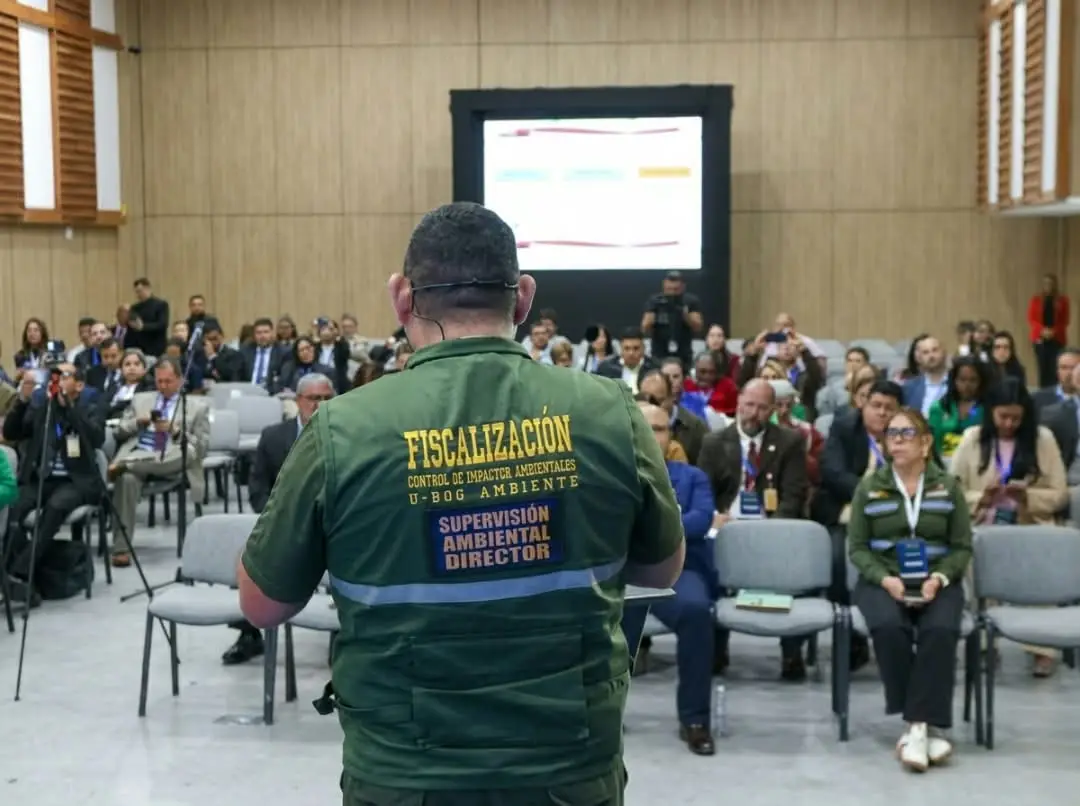
The Daily Journal – The recent technical workshop organized by the Ministry of People’s Power for Ecosocialism (MINEC) at PDVSA’s facilities in La Campiña, Caracas, to guide hydrocarbon companies through environmental control procedures, both before and after operations, raises a discussion that goes far beyond training oil industry operators, who already employ highly qualified professionals with extensive knowledge of the subject.
Although companies need to understand regulations and administrative procedures, presenting these initiatives as a response to an environmental problem with deep structural roots is insufficient. Venezuela’s main challenge is not the absence of regulations or a lack of knowledge about them, but the effective enforcement of laws, regulatory oversight, clear assignment of responsibility, and remediation of environmental damage.
Years of oil spills in Lake Maracaibo and along Venezuela’s coastline, deteriorating facilities and pipelines, and the accumulation of environmental liabilities reveal a crisis linked to underinvestment, inadequate maintenance, and, ultimately, limited institutional capacity to prevent and address the environmental impacts of oil operations.
In this context, MINEC’s emphasis on the participation of 46 companies operating under Production Sharing Contracts (CPP), with expectations of reaching 120 organizations, raises concerns because the ministry has provided no information about its actual capacity to supervise these operations.
How many environmental inspectors does the ministry employ? How many inspections does it conduct, and what sanctions has it imposed? How many oil spills has it addressed, and how many environmental liabilities has it effectively remediated?
The number of companies receiving guidance or workers attending technical workshops does not indicate environmental performance. Authorities must measure environmental management through tangible results: oil spill prevention, emergency response capacity, compliance with legal obligations, and restoration of affected ecosystems.
This discussion becomes even more relevant as additional private companies enter the oil industry and operators reactivate fields that carry longstanding problems involving contamination, deteriorating infrastructure, and abandonment. These circumstances raise a fundamental question: Who will assume responsibility for previous environmental damage?
The case of GeoPark in the Bare Block of the Orinoco Oil Belt illustrates this issue.
The Colombian company, which entered the project as an operator under a 25-year Production Sharing Contract, acknowledged environmental liabilities inherited from previous operations. Its CEO, Felipe Bayón, publicly stated that GeoPark does not consider itself responsible for these preexisting liabilities and that contractual mechanisms allow the company to recover costs if it must undertake remediation work.
This position raises a fundamental consideration: the contractual allocation of financial responsibilities between PDVSA and a new operator does not eliminate environmental damage, nor does it justify postponing remediation indefinitely.
The Venezuelan state must ensure that authorities identify, quantify, and remediate these liabilities. This requirement must extend to every oil field that comes under the management of new operators.
Authorities cannot allow production recovery to advance while communities and the country’s natural heritage continue to bear the burden of unresolved environmental damage.
MINEC should use these workshops to present a public assessment of the oil industry’s environmental conditions, including an updated inventory of environmental liabilities, oil spill statistics, inspection results, enforcement proceedings, and remediation programs.
Institutional responsibility cannot end with training. Communities, environmental organizations, and Venezuelan society as a whole have the right to obtain firsthand, fully transparent information about the true extent of the oil industry’s environmental liabilities during this new phase of sector reactivation.
They also have the right to demand independent mechanisms to monitor and verify remediation efforts.
The recovery of the oil industry cannot rely exclusively on increased production or new investment as measures of success. It must also account for preventing further environmental damage and remediating historical impacts.
After decades of deterioration, Venezuela needs institutions that can enforce laws, establish accountability, and demand environmental restoration, rather than merely explain how companies should process environmental permits.
Corporate training can serve as a complementary tool, but it cannot resolve a structural crisis.
Venezuela’s oil industry cannot settle its environmental debt through technical workshops. It must do so by enforcing laws, demanding accountability, and repairing the damage.