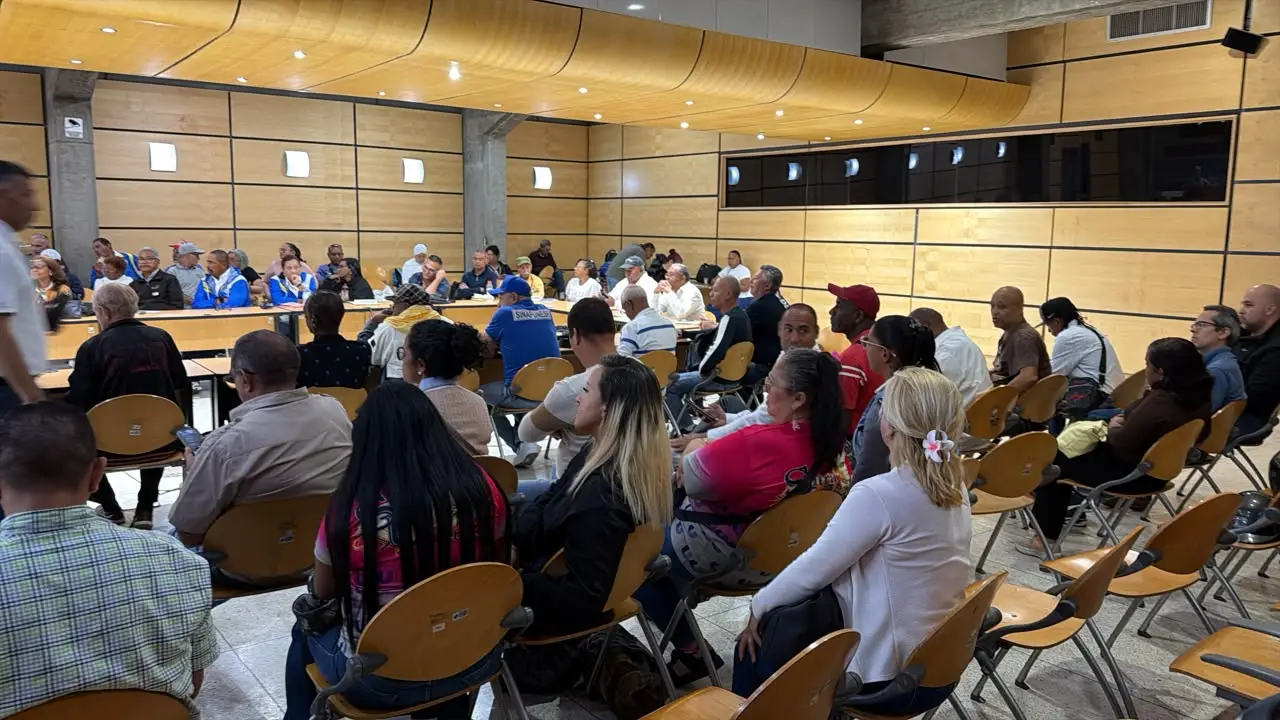
The Daily Journal.- The First National Congress of Grassroots Trade Unions took place Thursday at the Central University of Venezuela (UCV). The gathering brought together workers from various production and service sectors to discuss the working class’s economic and social conditions, defend labor rights, and coordinate strategies to promote new rounds of collective action.
According to organizers, about 100 workers from 19 Venezuelan states are participating, including representatives from the oil, metalworking, salt, sugar, teaching, educational support, construction, university, plastics, rubber, and public administration sectors.
The agenda includes an analysis of workers’ economic conditions, declining incomes, and what organizers describe as the transfer of national resources to transnational corporations. The congress operates under the slogan “Unity and Struggle.”
Wages, social debt, and oil resources on the agenda
One of the congress’s main objectives is to establish a framework for dialogue and coordination among grassroots trade unions nationwide to organize collective actions and strengthen workers’ struggles.
Participants also aim to approve a joint declaration defending labor rights and national independence amid the current political situation.
Another central issue concerns reaffirming wages as compensation for labor rather than replacing salaries with bonus payments. In this regard, the congress seeks to uphold workers’ right to receive a salary and demand the repeal of measures that organizers consider contrary to the Constitution and economic and social rights, including the Patria Platform, Memorandum 2792, and the National Budget Office (Onapre) guidelines.
The agenda also calls for assessing the government’s outstanding social obligations to workers and rejecting any policy that prioritizes public debt payments over fulfilling those obligations.
On the oil industry, trade unions intend to demand transparency in revenue management and oppose what they describe as foreign companies and other external actors plundering national wealth.
Organizers also plan to establish a rapid communication and coordination mechanism among participating organizations to facilitate meetings and joint responses. Another objective is to develop a minimum program of collective action that will guide trade union activities beginning in January 2027.
Debate on the economic and political situation
The event began with the formal opening of the congress and the establishment of a steering committee to lead discussions and organize the proposals.
The program includes presentations by economist Carlos Dúrich, who will examine Venezuela’s economic situation and its outlook for workers, and Professor Andrés Antillano, who will analyze the political landscape and its impact on the working population and its struggles.