By Héctor Sánchez
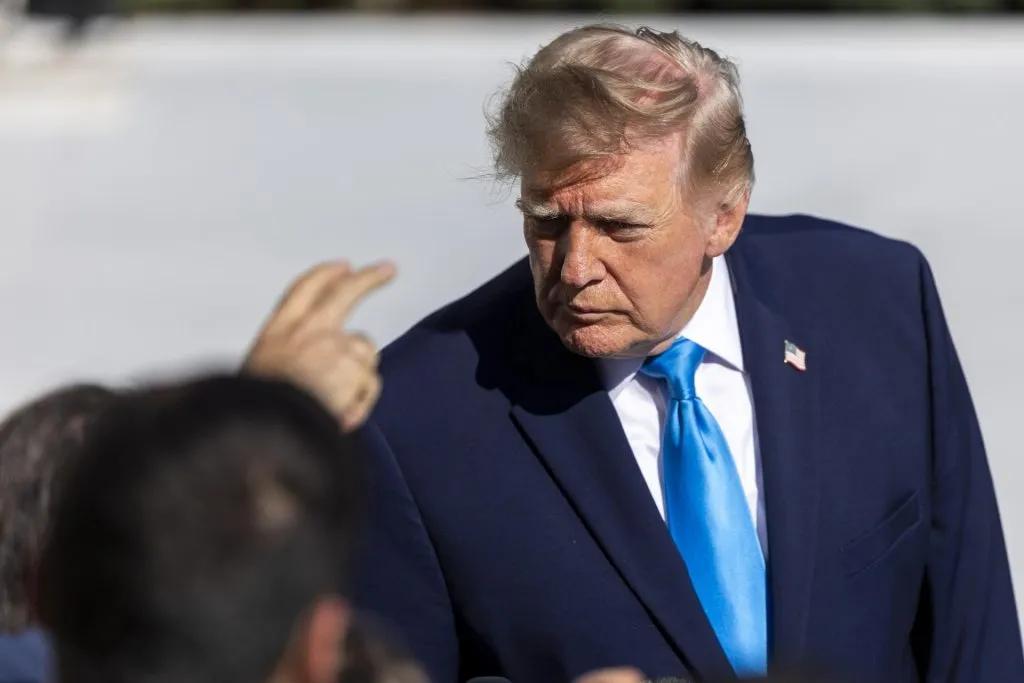
The prospect of an unfavorable outcome for Donald Trump in the midterm elections had generated considerable expectations. Political sectors across the continent argued that a legislative setback in Washington would force the White House to moderate the aggressive agenda it had imposed on Venezuela since January 3.
The electoral setback came decisively. The London School of Economics described it as a genuine “blue tsunami.” Democrats regained control of the Senate with at least 54 seats and the House of Representatives with 254 seats, sweeping through traditional Republican strongholds such as Texas, Ohio, Kansas, North Carolina, and Iowa.
However, for Venezuela, the script does not change; the outcome merely confirms it. Immediately after acknowledging his electoral defeat, Trump reverted to his usual self. The first unmistakable sign that his administration had no intention of backing down came when he fired his chief of staff, Susie Wiles, and replaced her with Stephen Miller, the architect of the most radical immigration policies and the ideologue of the hardline faction that openly declares that force governs the world.
Miller is no incidental official. He is the mastermind behind the most extreme version of “America First,” the architect of military operations and the blockade in the Caribbean. His promotion demonstrates that the electoral defeat on Capitol Hill has not weakened the executive branch on the international front; instead, it has made it more unpredictable and dangerous. The political divide in Congress changes Washington’s domestic political climate but does not dismantle the bipartisan consensus behind imperialism. Preserving regional hegemony and controlling strategic energy resources remain nonnegotiable priorities for the White House.
For Delcy Rodríguez’s government, Trump’s decision to dig in reinforces its course of action and calculations for political survival. Washington will not seek a different negotiating partner. The State Department’s roadmap remains intact, and Stephen Miller himself oversees its implementation, maintaining a working relationship with the leadership at Miraflores since January.
The “Rodrigato” model rests on a straightforward premise: achieving political stabilization under U.S. supervision and handing over oil resources in exchange for remaining in power. This strategy of subordination does not depend on the balance of power in Congress; it depends on the will of the White House occupant. Democrats may summon officials for questioning or raise objections in Congress, but political noise does not stop drilling operations or commercial agreements with multinational energy corporations.
Through energy cooperation agreements and mining laws that once again open Venezuela’s underground resources to U.S. capital, the executive branch has relinquished control of key deposits and entrusted national revenues to the Federal Reserve Bank of New York and multinational corporations. Government rhetoric attempts to portray these measures as sovereign pragmatism. In practice, however, they represent a colonial realignment that sacrifices the country’s economic and political independence to protect the privileges of a bureaucracy disconnected from the people. Political operatives from both the government and opposition factions sustain this arrangement, despite their apparent rivalry and fundamental similarities.
Meanwhile, factions of the business-oriented opposition and groups such as Figuera’s celebrate the consolidation of this political scenario. Their strategy of applauding every concession, justifying the opening of the oil industry, and competing for the favor of U.S. officials faces no threat. As long as Trump maintains his course, these leaders see no reason to change their subservient behavior. Both wings of the right show the same historical failing: the national bourgeoisie’s complete inability to formulate a sovereign, independent national project.
Venezuela remains trapped between factions openly competing for Washington’s approval. Both the ruling elite and the various opposition groups wear Uncle Sam’s emblem on their chests without even attempting to conceal it. Despite the Republican collapse in the U.S. midterm elections, Washington’s policy toward Caracas shows no signs of changing direction. Instead, it is becoming more entrenched.
Between the pragmatic capitulation of Delcy Rodríguez’s regime and the disarray of a right wing that lacks a national project, the working class emerges as the only force capable of charting a sovereign course. Against this backdrop, the Venezuelan people must once again raise the banners of a popular, deeply democratic, and transformative nationalism, capable of casting off the heavy burden of a submissive and fraudulent political leadership.