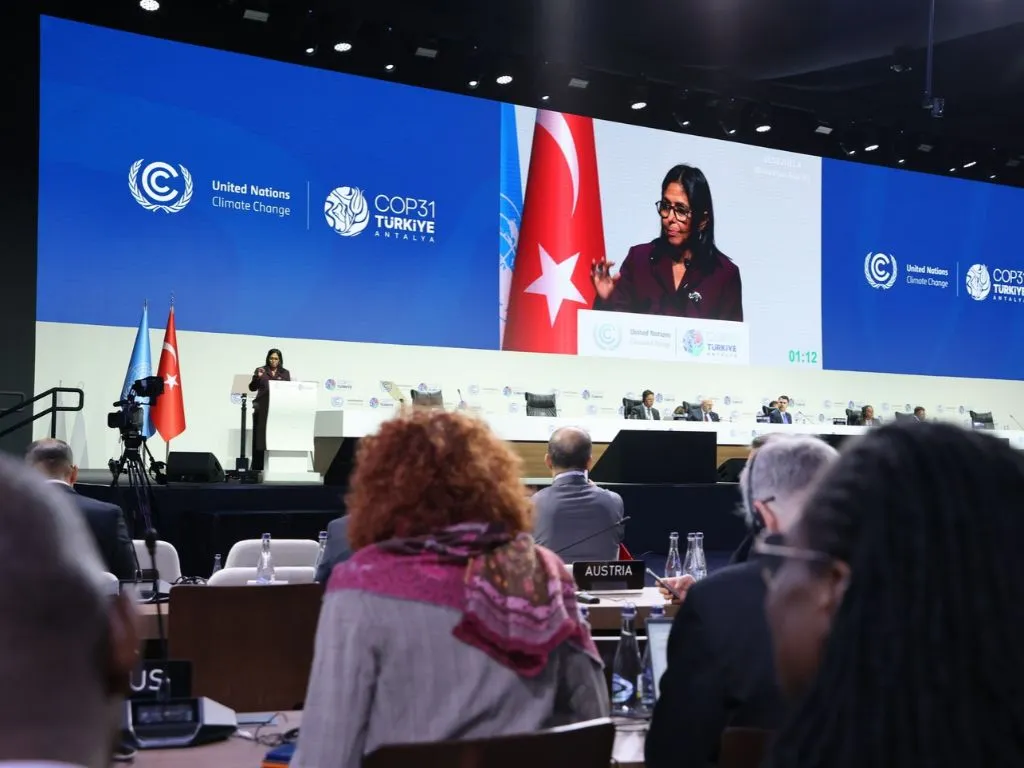
The Daily Journal.- Venezuelan President Delcy Rodríguez addressed the High-Level Segment of Heads of State and Government at the 31st Conference of the Parties to the United Nations Framework Convention on Climate Change (COP31) on November 12, at the Antalya Expo Center in Türkiye. During her speech before the plenary session, Rodríguez outlined Venezuela’s position on climate action and announced the creation of a plan called “Venezuela Vive.”
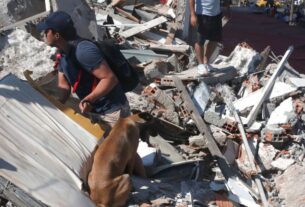
Rodríguez warned about the urgency of the climate crisis and argued that decisions made during this decade will determine the future of coming generations. She mentioned the loss of glaciers in Venezuela and the possibility of an extreme climate event. She also expressed gratitude to Türkiye for its solidarity following the seismic events that struck Venezuela on June 24.
Regarding emissions, the president stated that Venezuela accounts for just 0.39% of greenhouse gas emissions and that its ecosystems absorb 1.8 tons of carbon for every ton the country emits. She noted that the law protects more than 64% of Venezuela’s territory and that national parks account for nearly 22%. She also linked the country’s current environmental policy to an 1827 decree by Liberator Simón Bolívar to protect water sources and plant one million trees.
On the energy transition, Rodríguez argued that “a just transition does not shut down economies; it transforms them” and defended Venezuela’s right to develop its energy industry. She stated that hydroelectric sources account for 80% of the country’s electricity generation, that reforestation efforts have covered nearly 70,000 hectares since 2018, and that the government aims to integrate photovoltaic energy into the National Electric System. She added that Venezuela has reduced its flaring intensity per barrel for four consecutive years.
The president also addressed the climate financing gap, noting that developing countries need $310 billion annually for adaptation but receive less than $26 billion. She called on developed nations to fulfill their commitments to cooperation and technology transfer.
Regarding the “Venezuela Vive” plan, Rodríguez explained that the initiative seeks to coordinate efforts to protect forests, water resources, oceans, and biodiversity. In this context, she warned about the condition of the oceans, which absorb 91% of the planet’s excess heat, and the threat of plastic pollution.
“Either we all act together, or life fades away,” she concluded.