The U.S. president claimed that Venezuela’s incorporation has helped consolidate his country’s position as the world’s leading producer of oil and natural gas. He made the remarks during a meeting with Philippine President Ferdinand Marcos Jr. in Manila.
The Daily Journal – U.S. President Donald Trump described Venezuela as a “new acquisition” of the United States and claimed that its incorporation has significantly strengthened America’s energy position, highlighting Washington’s leadership in global oil and natural gas production.
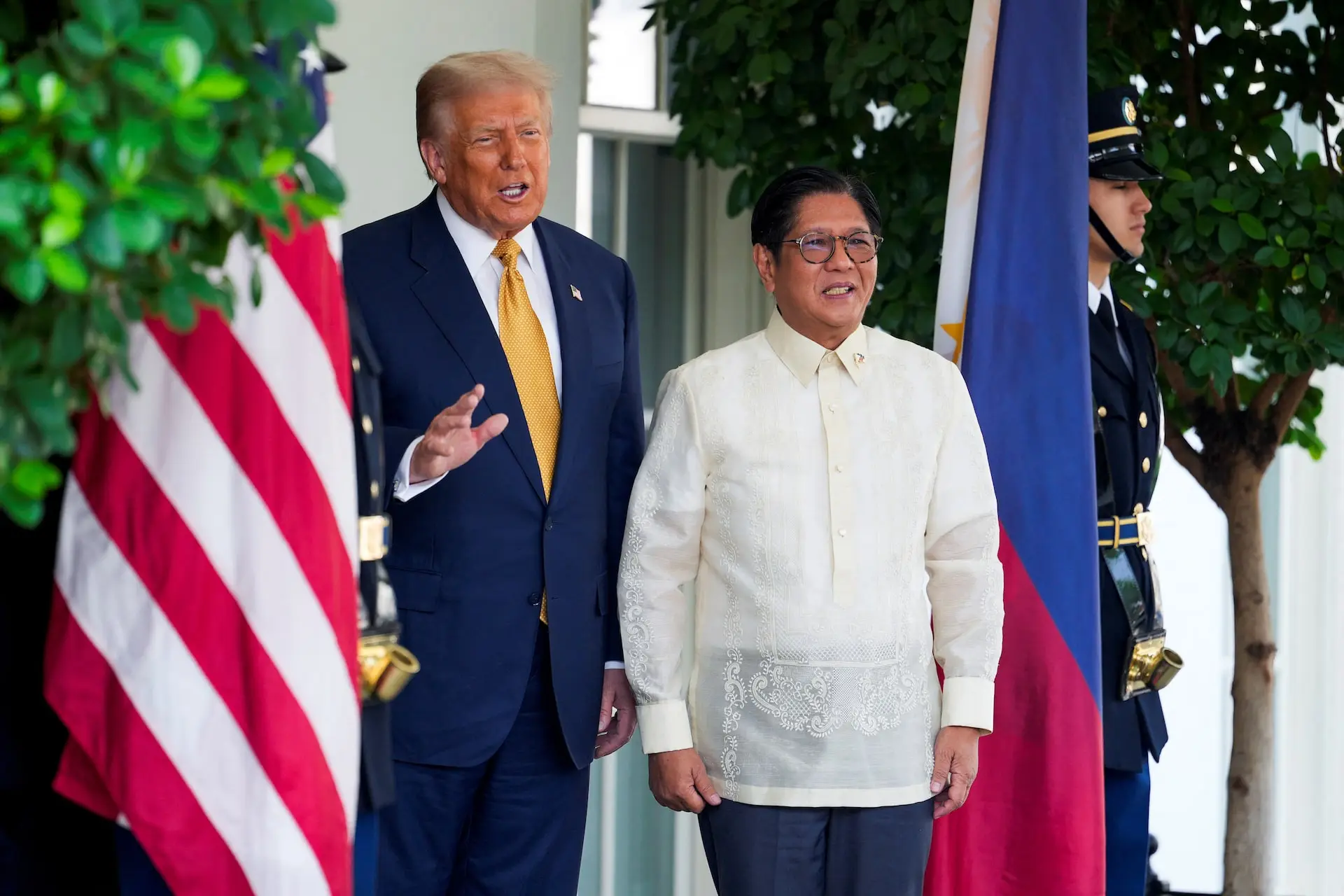
“You also have to add Venezuela, which was our new acquisition. It was an acquisition, whether people want to say it or not, and it’s incredible what has happened to the United States,” Trump said Wednesday during a meeting with his Philippine counterpart, Ferdinand Marcos Jr., at Malacañang Palace in Manila, according to a report by the EFE news agency.
The president added that the United States is now “by far the leading producer of oil and natural gas,” as the two leaders discussed opportunities to expand energy cooperation between Washington and Manila.
Trump also maintained that his country produces more energy than any other nation and that its output even exceeds the combined production of Russia and Saudi Arabia.
His remarks come as the U.S. administration seeks to promote its energy capabilities as a tool for cooperation with allies, particularly in Asia, where disruptions to energy supplies and prices stemming from the war in Iran have affected the region.
During the meeting, Trump announced that Washington has advanced a major natural gas pipeline project in Alaska to export energy to its Pacific partners and identified the Philippines as a potential participant.
Secretary of State Marco Rubio, Treasury Secretary Scott Bessent and Commerce Secretary Howard Lutnick attended the meeting, along with other members of the U.S. delegation.
Energy cooperation and regional influence
The meeting between Trump and Marcos Jr. focused primarily on strengthening the bilateral alliance and expanding cooperation in defense, technology, and energy.
The U.S. president emphasized that Washington’s relationship with the Philippines ranks among its oldest and most important partnerships in the Pacific. He also expressed interest in expanding the defense agreement that the two countries have maintained since 1951.
For his part, Marcos Jr. reaffirmed his commitment to continued cooperation with the United States, identifying Washington as the Philippines’ only mutual defense treaty ally.
Both leaders planned to travel subsequently to Shenzhen, China, to participate in the Asia-Pacific Economic Cooperation (APEC) leaders’ summit, amid discussions on trade and energy relations and ongoing geopolitical tensions.
With information from EFE