By José Leonardo Salazar P
The Daily Journal – Venezuela’s hydrocarbon industry releases approximately 13 billion cubic meters of natural gas into the atmosphere annually from oil extraction, making the country the largest emitter of fossil methane in South America. With oil production recovering and new operating agreements on the horizon, this environmental and financial liability threatens to worsen unless the industry invests in gas capture and reinjection infrastructure.
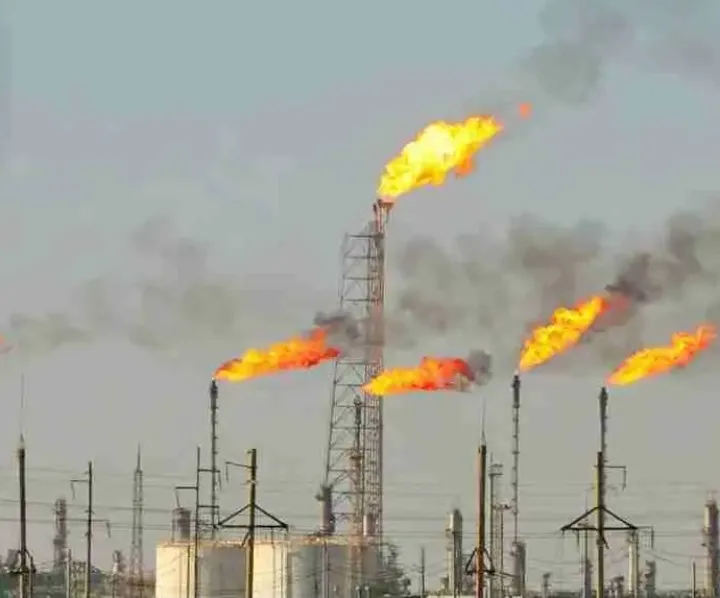
Venezuela’s oil sector faces a stark contrast between the revival of its operations and an environmental liability that costs the country billions of dollars. According to satellite data and reports from international organizations such as the International Energy Agency (IEA) and the World Bank, Venezuela releases nearly 13 billion cubic meters of natural gas annually through gas flaring, direct venting, and leaks at its facilities.
This volume represents approximately 25% of the country’s total natural gas production, with most losses concentrated in northern Monagas state, the Lake Maracaibo Basin and the Orinoco Oil Belt.
As a result, Venezuela accounts for nearly 45% of all methane emissions from the fossil fuel sector in Central and South America. The country also ranks among the world’s nine largest gas-flaring nations, with pollution intensity up to ten times the global average.
The origins of this practice date back to the early days of commercial hydrocarbon production in Venezuela during the 1910s and 1920s, when operators regarded associated natural gas as a mere byproduct with no commercial value. Although the country developed compressor stations and gas-injection infrastructure in the second half of the 20th century to harness this resource, the trend reversed dramatically in the mid-2010s because of declining investment, operational deterioration, and a shortage of pipelines.
According to estimates from specialized satellite-monitoring firms such as Capterio, burning and leaking this hydrocarbon results in approximately $1.4 billion in lost revenue every year. Over the past decade, Venezuela has lost between $12 billion and $14 billion in energy resources that have literally vanished into thin air — a troubling paradox for a nation suffering from chronic and severe shortages of natural gas for residential, industrial, and thermoelectric use.
The climate impact of this waste extends far beyond the financial figures and raises serious concerns. Gas flaring generates between 16 million and 20 million metric tons of carbon dioxide equivalent annually. However, the greatest threat comes from methane that escapes without burning completely because of maintenance failures or weather conditions.
Methane has a global warming potential more than 80 times that of carbon dioxide and often escapes alongside black carbon and volatile organic compounds.
Together, direct emissions and flaring from oil operations account for an estimated 40% to 80% of Venezuela’s total greenhouse gas emissions, seriously undermining national and regional environmental objectives.
Against this backdrop, industry specialists agree that the most viable and profitable solution is to implement a comprehensive plan to capture, compress, and monetize natural gas at production sites.
This strategy requires three priority actions: repairing leaks in deteriorated valves and pipelines and reactivating compressor stations to reinject gas into reservoirs, thereby increasing pressure and improving crude oil recovery; installing modular thermoelectric plants or wellhead microturbines to supply the national electricity grid; and processing natural gas liquids to produce propane and butane, helping meet domestic demand for liquefied petroleum gas.
However, the prospects for achieving this transformation face a decisive test amid the profound restructuring of Venezuela’s oil industry in 2026.
With the reform of the Organic Hydrocarbons Law, the signing of the energy framework agreement between the United States and Venezuela — which includes the Oil Fund mechanism and the concession of 17 oil fields containing reserves of 65 billion barrels to North American Blue Energy Partners (NABEP) — and PDVSA’s signing of approximately 80 new operating agreements, projections point to investment inflows of up to $100 billion over the long term.
These developments could also drive oil production toward 1.3 million to 1.5 million barrels per day between the end of this year and 2027.
Although this new cycle creates opportunities to integrate methane into the electricity system and revive negotiations for pipeline gas exports to neighboring countries such as Colombia, serious operational risks remain.
If increased crude oil production does not come with immediate investment in gas compression and transportation infrastructure, Venezuela risks releasing even greater volumes of natural gas into the atmosphere, perpetuating an economic and, above all, ecological loss of historic proportions.
As Venezuela revitalizes its oil industry, we cannot measure progress solely by the number of active greenfield and mature oil fields, jobs created, or projected profits. We will inflict tremendous harm upon ourselves if we fail to recognize and address this structural crisis.
We must stop looking the other way when confronting the delicate issue of environmental liabilities associated with oil production.