The Daily Journal.- Four Venezuelan trade union confederations rejected the so-called Labor and Social Consensus Roundtable, arguing that its negotiations exclude a significant portion of the labor movement and could pave the way for mechanisms that weaken workers’ rights under the Constitution and the Organic Labor Law.
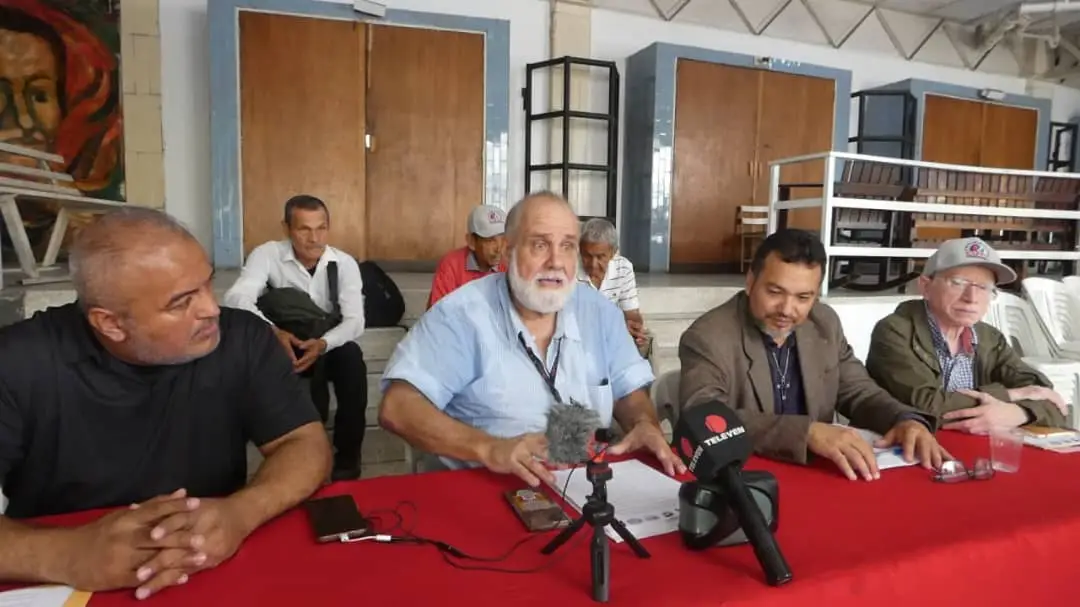
During a press conference, representatives of the National Union of Workers of Venezuela (UNETE), the Confederation of Autonomous Trade Unions (CODESA), the General Confederation of Workers (CGT), and the United Workers’ Confederation of Venezuela (CUTV) urged workers to remain mobilized against what they described as threats to their historic labor achievements.
In a joint statement that UNETE National Coordinator Servando Carbone read aloud, the organizations denounced the roundtable’s attempt to project an image of inclusive dialogue and democratic consensus while making decisions without consulting workers or their grassroots organizations.
“We reject the backroom agreements taking place within the so-called Labor and Social Consensus Roundtable,” the statement reads. It questions the participation of only three of Venezuela’s seven legally established trade union confederations recognized by the International Labor Organization (ILO).
The confederations maintain that those participating in the negotiations neither represent the labor movement’s diversity nor have the authority to compromise workers’ rights as a whole.
One of their main objections concerns the possibility of introducing a labor consensus law. According to the statement, such a mechanism would seek to legitimize an agenda favoring public and private employers through legislation that, in the organizations’ view, would legalize the practice of replacing wages with bonuses and weaken rights concerning salaries, wage-related benefits, severance payments calculated based on the most recent salary, and job security protections.
The confederations also condemned a public campaign that they attribute to representatives of Fedecámaras, neoliberal technocrats, and government spokespersons, who portray the current labor system as an obstacle that authorities must eliminate.
They warned that further deregulation could lead to increasingly precarious working conditions, inadequate wages and pensions, job instability, weaker collective bargaining agreements, and restrictions on freedom of association and the right to strike.
Demands: Wages, severance benefits, and year-end bonuses
Among their principal demands, the four organizations called on the government and private employers to restore the constitutional minimum wage, recognize employment-related bonuses as part of workers’ salaries, respect collective bargaining agreements, and end the persecution of independent trade union leaders.
They also demanded the reinstatement of workers who lost their jobs unjustly in both the public and private sectors, along with the repeal of Memorandum-Circular 2792 and the National Budget Office (Onapre) guidelines, which they consider harmful to labor rights and severance benefits.
The statement included a specific demand regarding year-end bonuses for public employees. The confederations proposed calculating the bonus based on four months of total monthly compensation of $200, resulting in a minimum payment of $800 in bolívares at the Central Bank of Venezuela (BCV) exchange rate on the payment date.
“We urgently demand and propose that the government begin paying year-end bonuses to all employees of the central and decentralized public administration,” the statement says.
The organizations requested a single lump-sum payment rather than installments, citing the high cost of living.
They also said they sent a letter to the ILO Director-General and his governance team, asking them to urge the Venezuelan government to honor the agreements reached during the fifth session of the Social Dialogue Forum on April 29, 2026.
According to the statement, those commitments include measures concerning the minimum wage, freedom of association, collective bargaining, and labor rights protections, in accordance with the recommendations of the ILO’s 2019 Commission of Inquiry.
The confederations expressed support for the struggles of active and retired workers in the oil industry, Guayana’s basic industries, healthcare, education, public administration, and various private-sector activities. They also pledged to promote united trade union action to prevent the current negotiations from eliminating previously acquired rights.
“No form of dialogue can serve to legitimize the confiscation of workers’ socioeconomic achievements,” the statement concludes.
CGT: A parallel law would be unconstitutional
José Vicente Rivero, CGT National Executive Secretary, questioned the roundtable’s claims of labor representation, noting that its participants had previously supported a proposal for a minimum living income that did not guarantee recognition of an actual wage.
Regarding the possibility of approving a consensus law, Rivero argued that the Constitution and the Organic Labor Law establish progressive rights and therefore prohibit regressive provisions that diminish existing protections.
“Creating a parallel law that would rank below the Organic Labor Law is, logically and legally, unconstitutional. We categorically reject that situation,” he stated.
Rivero warned that changes to the severance benefits system could cause losses that potential income increases would not offset.
“A worker who loses their severance benefits after so many years” would not necessarily recover those losses through a $50, $100, or $200 increase, he explained.
The union leader also accused private employers of violating Article 142 of the Organic Labor Law, which governs severance benefit deposits, and maintained that workers continue to bear the consequences of economic and labor policies.
At the end of the press conference, Rivero raised another complaint concerning an October 13, 2026, circular that he attributed to the National Directorate of Public Sector Labor Inspection within the Ministry of Labor.
According to Rivero, the document prohibits the ministry’s offices from accepting applications to establish trade unions, as well as communications concerning independent union elections and their results.
“Right now, workers who want to organize and establish a union cannot do so; workers who want to hold independent elections will not be able to do so,” he denounced.
In his view, the measure violates ILO Convention No. 87 concerning freedom of association.
CUTV: “You Cannot Create Supposed Legal Certainty for Investors at the Expense of Legal Insecurity for Workers”
Pedro Eusse, CUTV Secretary-General, argued that no labor agreement can claim legitimacy without representation from all sectors of the workforce. He called for effective, transparent dialogue with the ILO’s participation in Venezuela.
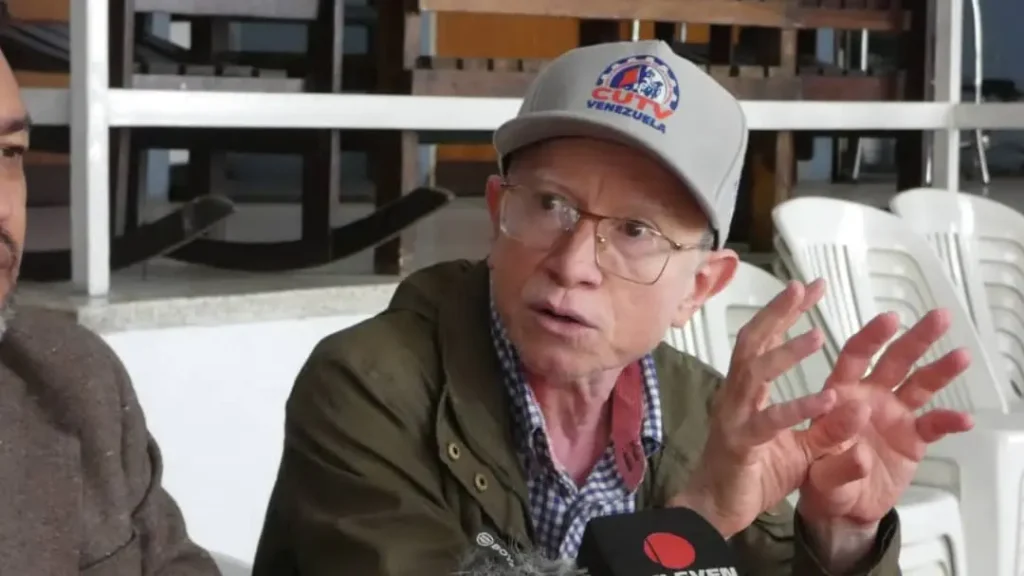
Photo: Camilo Arias
The union leader acknowledged the need to develop a social security system that guarantees decent living conditions for retirees and pensioners, but rejected efforts to use that objective to justify closed-door negotiations.
“We want real, concrete dialogue, and above all, we want the ILO present in Venezuela,” he stated.
Eusse criticized what he described as a campaign by business and government representatives to portray the elimination or relaxation of labor protections as an economic necessity.
In his view, the problem does not lie in existing regulations but in the failure of public and private employers to comply with them.
He also linked declining wages to labor policies that authorities have implemented since 2018 and to the growing proportion of bonuses in workers’ total income.
The CUTV representative rejected the argument that attracting foreign investment requires reducing labor protections.
He noted that the government has reported 22 consecutive quarters of economic growth and rising oil revenues, developments that, in his view, contradict claims that workers must accept further losses.
“You cannot create supposed legal certainty for investors at the expense of legal insecurity for workers,” he declared.
Eusse also warned that announcements concerning a potential consensus law have lacked sufficient transparency. He argued that the initiative aims to relax labor regulations so employers can evade their obligations with government backing.
CODESA: The wage crisis has eroded severance benefits
Miguel Ángel Pérez, CODESA National Coordinator, recalled that workers have endured years of inflation and currency redenominations, which, according to him, have diminished the value of severance benefits and the accumulated guarantees of workers and employers.
Pérez warned that the current negotiations could eliminate protections that the Constitution guarantees but that authorities and employers have failed to uphold adequately in practice.
“Today, through the Labor and Social Consensus Roundtable, they intend to eliminate that guarantee, that right,” he stated.
The union leader emphasized that the four confederations would maintain their coordination to denounce what they consider threats to labor rights and support demonstrations across different sectors.
“We will support every struggle that emerges in the various areas or sectors of employment,” he assured.
He specifically mentioned oil workers, retirees, and pensioners, warning that the economic crisis affects Venezuelan families throughout the country.
UNETE: “Public employees are at rock bottom, pensioners are at rock bottom”
Servando Carbone, UNETE National Coordinator, read the joint statement and rejected the notion that trade union confederations must accept concessions to participate in labor dialogue.
“We have already given up a lot. We have already conceded more than enough,” he responded when reporters asked whether the organizations would consider abandoning some of their demands.
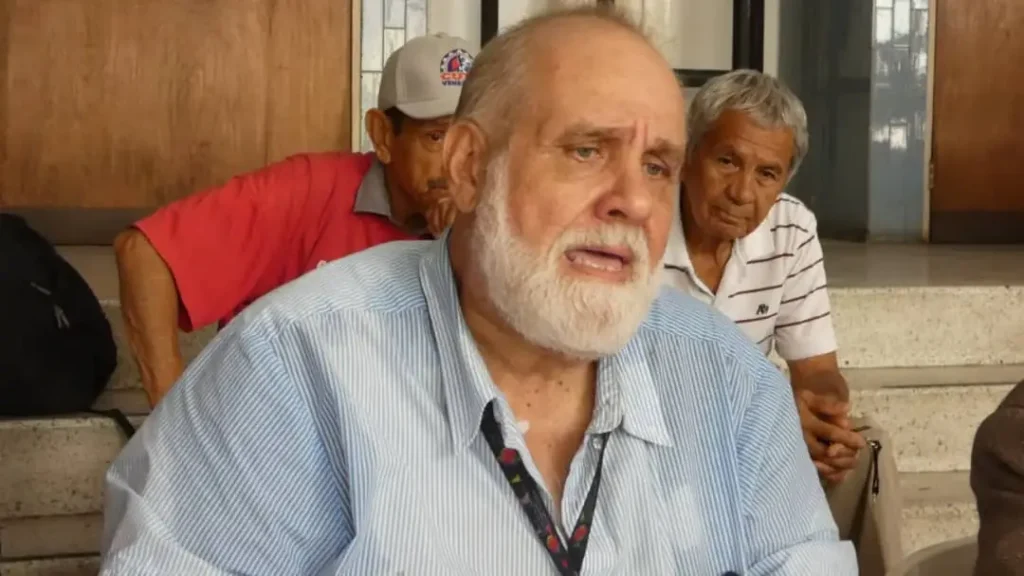
Photo: Camilo Arias
Carbone defended the need for a social dialogue forum where trade unions could present their demands on equal terms and seek concrete responses from the government and business sector.
“At a critical moment, at a time of reconstruction, we workers are the foundation and the structure for rebuilding the state and the country, in both the public and private sectors,” he stated.
The union leader questioned efforts to create expectations of consensus while public employees and pensioners face what he described as a critical economic situation.
“Public employees are at rock bottom, pensioners are at rock bottom, under a policy of hunger and misery,” he declared.
For Carbone, the discussion should not focus solely on whether workers must surrender their rights but on the government’s and employers’ ability to provide concrete solutions to workers’ needs.
In that context, he reiterated the demand for immediate payment of year-end bonuses.
“Workers know exactly what they want: we want our year-end bonus now! Are they going to pay it?” he asked.
He warned that the unions would continue mobilizing if authorities failed to respond.
“If we do not agree, we have the streets, because our struggle takes place in the streets.”